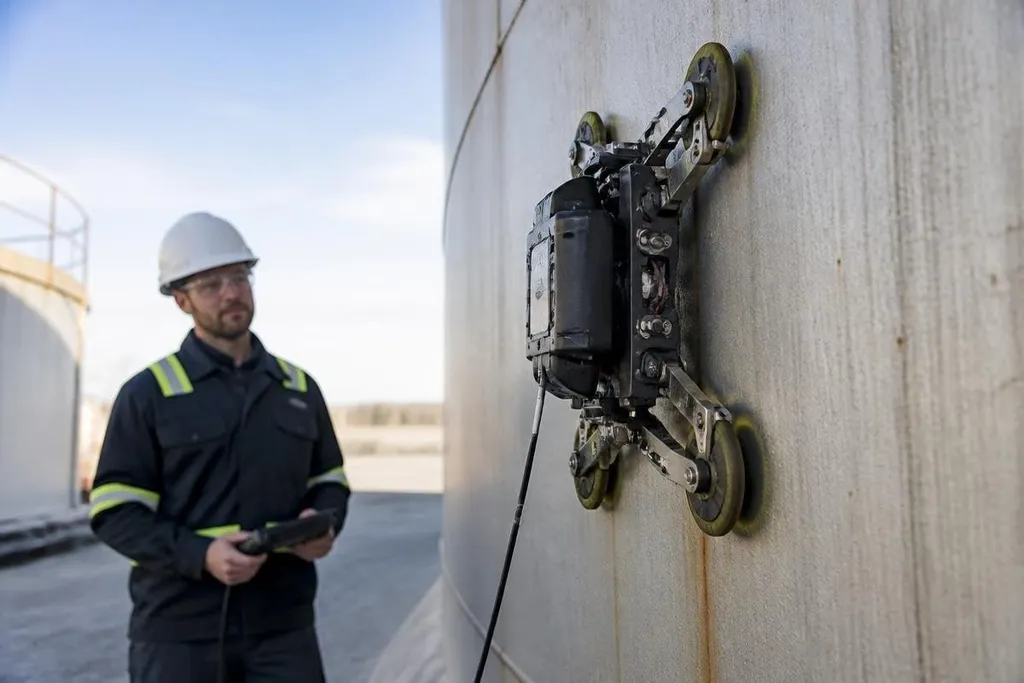
A climbing robot must solve a problem a wheeled robot can avoid: every kilogram pulls the machine away from the surface. Its grip, body shape, motors, and control software must work together while the robot moves across walls, tanks, glass, or steel structures.
This article explains how that grip works, why surfaces matter, and where climbing robots still struggle.
- Adhesion keeps the robot attached; motors move it along the surface.
- Magnetic systems suit steel, while vacuum systems need a sealed contact area.
- Dust, gaps, rough coatings, and sharp changes in slope can break contact.
How a climbing robot stays attached
The first choice is the way the robot holds the surface. Magnetic robots use permanent magnets or powered electromagnets. They can grip steel without touching it, which helps when the surface is wet or covered with a thin coating. The limit is clear: magnets do little on aluminum, concrete, glass, or painted material unless steel sits below the surface.
Vacuum robots use suction cups or sealed pads. A pump removes air from the pad, and the higher air pressure outside the pad pushes it against the wall. This method can work on smooth glass and painted panels, but even a small leak cuts the holding force. Dust, dents, seams, and rough paint make a seal harder to keep.
Some robots use dry adhesive pads. These pads rely on many small contact points and the forces between their surfaces. They don't leave liquid behind, and they can work on materials that defeat magnets. Their grip can weaken when dust fills the contact area, so the robot needs a way to clean or replace the pads.
A fourth approach uses claws, spikes, or tiny spines. These parts press into rough surfaces such as brick, concrete, or rock. Grip comes from the surface texture, but the contact points can damage paint, insulation, or thin panels. The design has to match the inspection job.
Movement is a control problem
Attachment alone won't make a climbing robot useful. It must shift its weight without losing contact, then place the next wheel, foot, or track section where it can carry that load.
That work depends on torque, the turning force from a motor. If the motor turns too weakly, the robot slips. If it turns too hard, the wheels can spin or the gripping parts can tear away from the surface. Sensors watch wheel motion, motor load, contact force, and body angle so the control system can adjust movement.
A route through surface changes matters too. A seam may be small enough for a wheel but too wide for a suction pad. A corner changes the load on each contact point.
On an overhead surface, gravity pulls the robot away from the wall rather than toward it, so the control system must keep checking grip during every step.
A climbing robot's grip decides whether an inspection run reaches the damaged panel or stops below it. Robot 24 reports on the machines and tests behind these systems, giving the next section a practical question to answer: can the robot keep working on a real site?
Where the science meets the work site
Climbing robots make sense when sending a person is slow, costly, or unsafe. A robot can inspect a storage tank, ship hull, bridge surface, or building panel while carrying a camera or a non-destructive testing sensor. The useful payload depends on the grip method, since pumps, magnets, batteries, and safety lines add weight.
The surface decides more than the maker's product page does. Steel favors magnetic systems. Clean glass favors suction. Rough concrete may need spines or claws. A mixed site can require a robot that changes its grip, or a separate method for each surface.
Weather adds another problem. Water can affect seals, wind can pull on the body, and cold can change battery output. Heat can damage adhesive pads or electronics. A machine that works on a clean test panel still needs checks on the actual structure.
I’d choose the grip system from the inspection surface first, then compare speed, payload, battery life, and recovery options.
A buying and deployment checklist
Before you approve a climbing robot for a work site, check:
- Surface material: Confirm every material, coating, seam, and texture the robot must cross.
- Grip loss: Ask what happens when a pad leaks, a magnet loses power, or a wheel slips.
- Safety backup: Check for a tether, brake, secondary grip, or another way to stop a fall.
- Useful payload: Subtract the weight of batteries, pumps, cables, and safety gear from the stated limit.
- Recovery plan: Test how a worker retrieves the robot after a stall, power loss, or blocked route.
The next step for climbing robots is not one universal foot or wheel. It is better matching between grip, surface, sensors, and the job. Until a system has been checked on the real structure, its wall-climbing claim remains a test result waiting to be earned.